
Discover how IET’s physics-based anomaly detection identified critical failure markers in subsea Electric Submersible Pumps (ESPs).
By analyzing slow-sampled historian data, IET enabled operators to predict failures, minimize downtime, and avoid costly repairs.
Discover how IET’s physics-based anomaly detection identified critical failure markers in subsea Electric Submersible Pumps (ESPs).
By analyzing slow-sampled historian data, IET enabled operators to predict failures, minimize downtime, and avoid costly repairs.
A unique type of Electric Submersible Pump (ESP) was deployed by IET’s client to address reservoir-specific challenges. These ESPs were mounted in caissons on the sea floor, thousands of feet below sea level, operating in an extreme 24/7 service environment.
This harsh setting resulted in a shorter mean time between failures (MTBF), making failure prediction critical to minimize unplanned downtime and costly repairs. Unlike surface-mounted ESPs, the subsea location of these pumps introduced significant challenges:
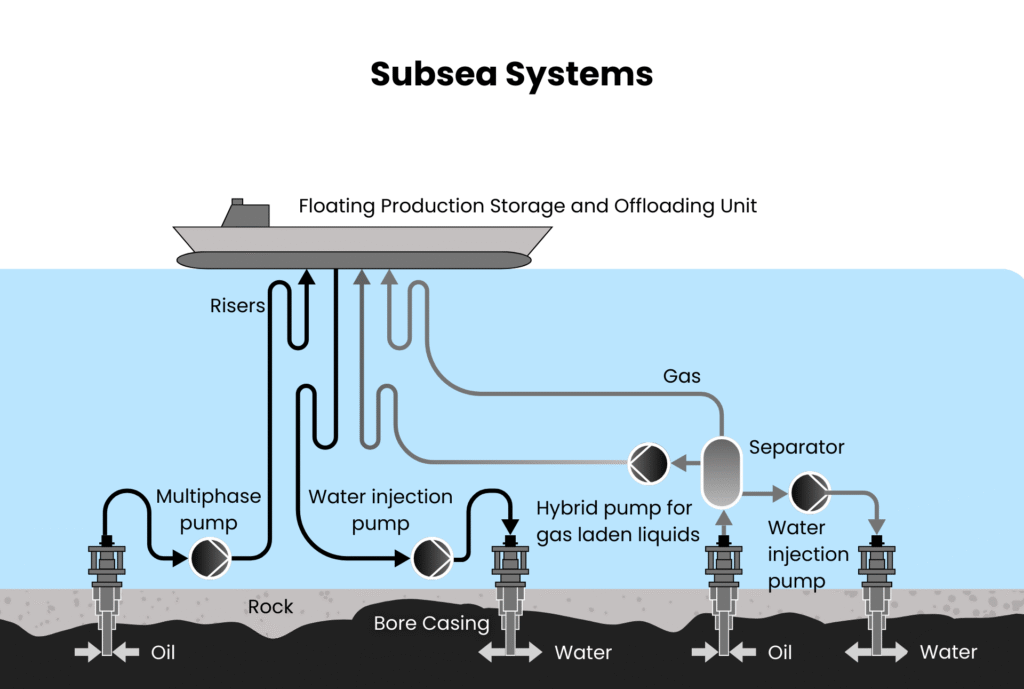
The client had previously attempted to identify pump failures using statistical methods, but these efforts proved unsuccessful. They turned to IET, providing historical data to uncover potential failure markers.
IET’s team quickly developed new analytical approaches and test frameworks, focusing on the limited historian data. By applying advanced signal processing and statistical techniques, IET identified promising patterns and insights.
Key breakthroughs included:

During the evaluation period, it was determined that applying IET’s monitoring, signal processing, and statistical techniques revealed markers in the historical data that pointed to an issue which progressively developed prior to the ultimate failure of the unit. These markers coincided with time frames in which it was determined that the pump inadvertently spun backwards due to a malfunctioning downstream check valve that allowed flow to reverse through the pump when it was shut down. This backspin has been known to cause damage to the unidirectional thrust bearings in the pump, eventually leading to failure.
ET’s innovative techniques demonstrated that even with low sample rates and compressed data, early indicators of ESP failure could be detected. The results-built confidence in the client’s ability to predict and prevent future failures.
Results Snapshot:
This case study demonstrates how IET applied physics-based anomaly detection to identify early indicators of failure in subsea Electric Submersible Pumps (ESPs). Using historical operational data and engineering-based analysis, the project uncovered critical failure markers, enabling earlier intervention, reduced downtime, and improved equipment reliability despite limited sensor data.
Discover how IET’s physics-based anomaly detection can protect your assets and reduce downtime.
Explore our other projects: