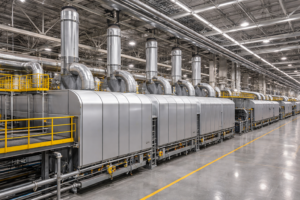

Core Concepts and Types of Preventive Maintenance
Preventive maintenance is often described in terms that make it sound almost inevitable, like gravity or weather. You set intervals, assign tasks, and then trust that the system will deliver reliability. In the ScienceDirect ScienceDirect explanation of preventive maintenance schedules and limitations, the strategy is presented as a way to minimize unexpected failures through scheduled interventions based on time or usage.
That’s the classic image of preventive maintenance: a steady, controlled rhythm of checks, replacements, lubrication, and inspections. It sounds like a disciplined machine itself—an orderly march toward fewer breakdowns.
But the real world is messier than the ideal. Preventive maintenance comes in several forms, and the differences matter. Fixed-schedule PM uses a predetermined timetable, often without reference to the equipment’s actual condition. It is common because it is easy to implement and easy to justify: “We maintain every six months,” or “We replace this part every 2,000 hours.” Usage-based PM, on the other hand, links maintenance to operating metrics like cycles or hours. This approach feels more rational because it attempts to align maintenance with real use. Yet even usage-based PM can miss the mark if the metrics don’t reflect stress, environmental impact, or sudden shifts in production demand.
The issue is not that preventive maintenance is inherently flawed. The issue is that it is often applied as if machines wear out in predictable, uniform ways. John M. Gross, in Fundamentals of Preventive Maintenance, emphasizes that preventive maintenance is effective only when combined with proper planning and analysis. Without that foundation, PM becomes a checklist—an activity that looks productive but is not grounded in reality. In other words, preventive maintenance can be powerful, but it needs to be built on actual equipment behavior, not just routine. This is where the limitations of preventive maintenance begin to show their true colors.
Over-Maintenance and Waste
 One of the most frequent criticisms of preventive maintenance is that it often leads to over-maintenance. This is the quiet problem that doesn’t always show up in maintenance reports, because it doesn’t look like failure. Over-maintenance is the phenomenon of performing maintenance too frequently, or on equipment that does not need it. It is the cost that comes from being overly cautious, from treating time as if it were the only indicator of deterioration.
ScienceDirect’s engineering overview highlights this limitation directly: fixed schedules can lead to unnecessary maintenance, increasing costs without proportionate benefits. The logic is simple, almost seductive: “If maintenance is good, more maintenance must be better.” But more maintenance can mean more downtime, more parts consumption, more labor hours, and more opportunities for errors. Over-maintenance can also cause unintended damage. Every time a machine is taken apart and reassembled, there is a chance of misalignment, improper torque, or contamination. In that sense, over-maintenance can turn preventive maintenance into a form of self-inflicted wear. This is one of the most insidious limitations of preventive maintenance—the damage that comes from trying to prevent damage.
The RSI International analysis of fixed-schedule preventive maintenance limitations, which explains how time-based maintenance can lead to both over-maintenance and under-maintenance when equipment condition is not directly measured. In a world where machinery operates under variable loads and environments, a time-based schedule is an approximation at best.
Some equipment may still be in excellent condition when maintenance is scheduled. The intervention then becomes unnecessary, and the organization pays the price in resources and lost production. John M. Gross’s textbook reinforces this idea, arguing that preventive maintenance should be applied selectively, particularly to critical assets where the cost of failure is high. When PM is applied universally, it becomes expensive and inefficient, diverting resources away from where they matter most. Such is one of the limitations of preventive maintenance.
This over-maintenance problem is often invisible because it does not cause immediate breakdowns. Instead, it quietly erodes efficiency. It can also distort the organization’s understanding of reliability, creating a false sense of security: if nothing fails, it must be working. But in reality, the system may simply be operating on a schedule that does not match reality. And that mismatch is one of the most consistent limitations of preventive maintenance.
Under-Maintenance and Missed Failures
If over-maintenance is one side of the problem, under-maintenance is the other. Under-maintenance occurs when schedules are too infrequent, when tasks are not performed correctly, or when the maintenance program fails to address the real causes of failure. The International Journal of Research and Scientific Innovation highlights how preventive maintenance can fail when schedules do not reflect actual equipment usage or environmental conditions. In many industries, operating conditions shift rapidly—production demands rise, processes change, and machines face new stressors. A schedule based on historical averages can become obsolete in a matter of months.
Not all failures follow predictable patterns, as highlighted in the British Journal of Management and Marketing Studies on unpredictability of failures in preventive maintenance, where sudden breakdowns occur despite scheduled upkeep.. Some failures are sudden and unpredictable, caused by complex interactions between components, external factors, or random events. The assumption that equipment degradation follows a predictable curve is often wrong.
Machines can fail without warning, and no amount of scheduled maintenance can prevent that. This is a fundamental limitation of preventive maintenance because it reveals the gap between theory and reality. Preventive maintenance assumes predictability. Reality often provides randomness. This is where the limitations of preventive maintenance feel most painful—when the plan breaks under the weight of the unexpected.
Under-maintenance can also arise from human and organizational issues. Even the best-designed PM plan will fail if maintenance tasks are skipped, delayed, or performed poorly. The Journal of Engineering and Applied Sciences emphasizes how implementation problems—poor documentation, inconsistent routines, lack of structure, and insufficient training—can undermine preventive maintenance programs. When maintenance is not carried out correctly, the system becomes ineffective. And when preventive maintenance is neglected, the organization often reacts with more reactive maintenance, creating a vicious cycle. The result is not just missed failures; it is a maintenance culture that is constantly behind the curve. That cycle is another of the core limitations of preventive maintenance.
If you’re wondering “What are the challenges of preventive maintenance?”, this cycle is one of them: the system relies on execution and consistency, and both are often missing.
Inefficiency in Predicting Actual Equipment Condition
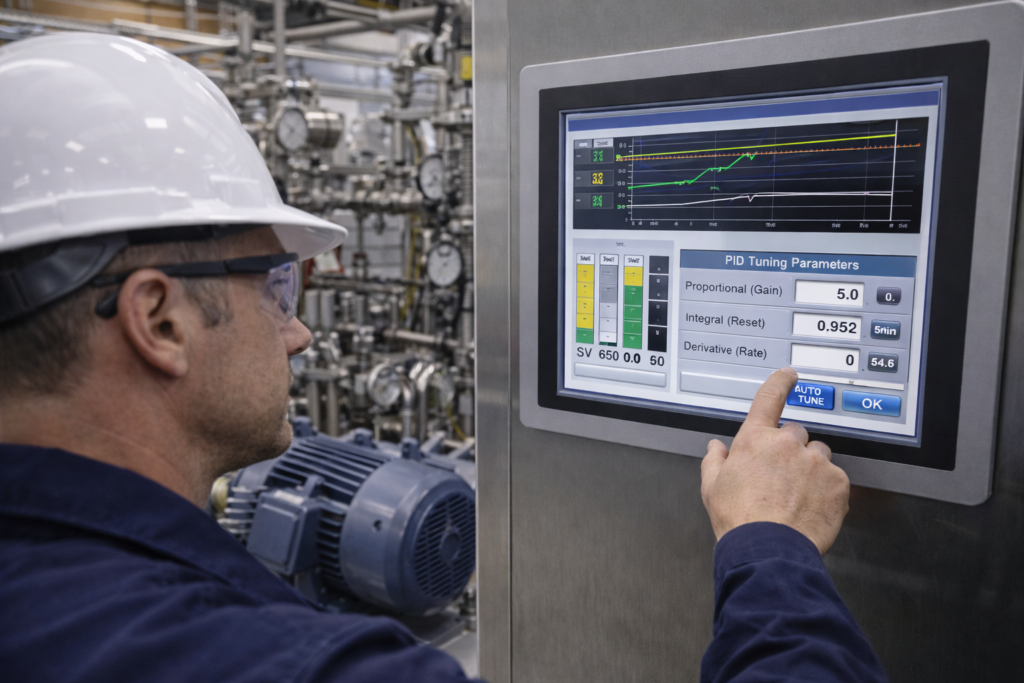 One of the key limitations of preventive maintenance is that it is often based on time rather than condition. Scheduled maintenance assumes that equipment degrades on a predictable timeline, but the truth is that machines degrade in unpredictable ways. The ScienceDirect overview notes that preventive maintenance is typically performed on a predetermined schedule without directly measuring equipment condition. That means maintenance may be performed too early or too late, because the schedule is not aligned with actual wear.
The International Journal of Research and Scientific Innovation argues that fixed schedules can be inefficient because they ignore actual equipment condition. Some equipment may degrade rapidly under certain conditions, while other equipment may remain stable far beyond its scheduled maintenance date. Environmental factors like humidity, temperature extremes, dust, or corrosive chemicals can accelerate wear in ways that time-based schedules cannot anticipate. Conversely, equipment operating in stable conditions may not need maintenance as often as scheduled, leading to wasted resources. This mismatch is one of the most glaring limitations of preventive maintenance.
John M. Gross’s textbook explains that preventive maintenance is most effective when supported by data and analysis. Maintenance planning should consider failure history, operating conditions, and asset criticality. Without these elements, preventive maintenance becomes a routine activity rather than a strategic one. It becomes a form of maintenance theater: tasks are performed, logs are filled, and everyone feels productive, but the underlying reliability may not improve. The key limitation here is that preventive maintenance, by itself, does not measure the machine’s real state. It relies on schedules and assumptions, and those can be wrong.
And when they are wrong, the limitations of preventive maintenance become expensive and visible.
If you want a simple summary of “What are the disadvantages of preventive maintenance?”, here it is: it can waste resources, miss real failures, and disrupt production.
Production Loss and Operational Disruption
Preventive maintenance is intended to reduce unexpected downtime, but it can paradoxically increase downtime if it is not managed carefully. Scheduled maintenance requires equipment to be taken offline, which interrupts production. In industries where continuous operation is critical—such as manufacturing, energy, and processing—even brief downtime can carry significant financial costs. ScienceDirect notes that preventive maintenance can cause production loss due to scheduled shutdowns. The irony is that a strategy meant to prevent disruption can become a source of disruption.
The Journal of Engineering and Applied Sciences emphasizes how maintenance programs can disrupt operations when they are not integrated into production planning. Maintenance windows are often limited, and when tasks cannot be completed within the allotted time, production may be delayed or forced to continue with incomplete maintenance. This creates a painful trade-off: either stop production to perform maintenance, or risk running equipment that may fail. The decision is rarely clear, and it often depends on short-term pressures rather than long-term reliability. This is one of the most concrete limitations of preventive maintenance—the disruption it creates in the pursuit of preventing disruption.
Production disruption also arises when preventive maintenance is poorly scheduled or overly frequent. Frequent downtime events can erode the benefits of preventive maintenance, turning the strategy into a series of interruptions that reduce productivity. The cumulative effect can be severe, especially when maintenance is applied to non-critical equipment simply because it is on the schedule. This is one of the most overlooked limitations of preventive maintenance: it can reduce reliability not through failure, but through constant interruption.If you’ve ever asked “What are the disadvantages of preventive maintenance?”, production loss is often the answer that hits hardest.
Implementation and Organizational Limitations
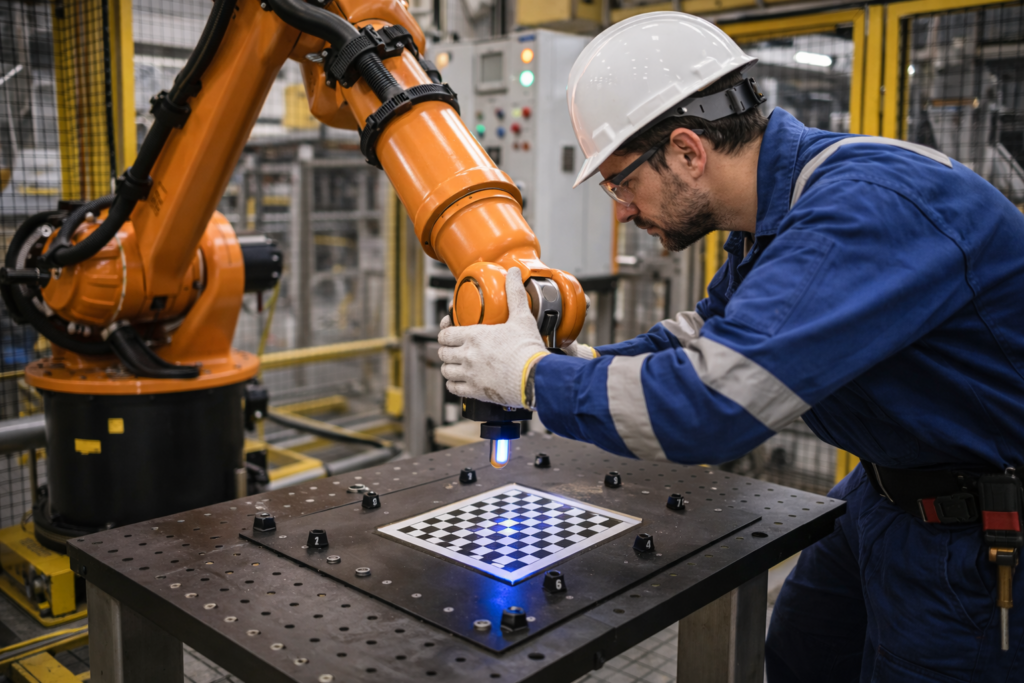 Preventive maintenance is not only a technical strategy; it is also an organizational system. Many of the limitations of PM stem from how maintenance programs are managed and executed. The Journal of Engineering and Applied Sciences highlights several organizational barriers that can weaken preventive maintenance programs. Poor documentation, inconsistent routines, lack of training, and insufficient structure can all undermine the effectiveness of preventive maintenance. When maintenance tasks are not recorded properly, it becomes difficult to analyze performance trends or adjust schedules based on real data.
Maintenance programs often fail due to execution gaps, as shown in the Journal of Engineering and Applied Sciences study on maintenance execution and organizational limitations, emphasizing the role of training and process consistency.
A reactive maintenance culture can also undermine preventive maintenance efforts. In many organizations, maintenance is viewed as a cost center, and there is pressure to minimize spending. This can lead to skipping or delaying preventive maintenance tasks, which increases the risk of failure. Even when PM is scheduled, it may be deprioritized in favor of urgent repairs. This creates a cycle where preventive maintenance is neglected, leading to more failures, which then demand reactive responses. The result is a system where preventive maintenance exists in name only, and reactive maintenance becomes the default. That is a clear and persistent example of the limitations of preventive maintenance.
John M. Gross emphasizes that preventive maintenance requires disciplined management, training, and continuous improvement. It cannot be treated as a checklist of tasks. It must evolve based on data and feedback. When organizations lack structure and discipline, preventive maintenance becomes ineffective. This is one of the most important limitations: the strategy depends on the organization’s ability to manage it properly. Without that ability, preventive maintenance becomes a costly illusion.
If you’re wondering “What are the challenges of preventive maintenance?”, the answer is often: people, systems, and consistency.
When Preventive Maintenance Is Not the Best Strategy
Preventive maintenance is not inherently flawed; its limitations become most evident when it is applied as the default strategy for all equipment. Maintenance needs vary by equipment type, criticality, operating conditions, and failure patterns. The British Journal of Management and Marketing Studies highlights that preventive maintenance cannot prevent all failures, especially sudden or unpredictable ones. This suggests that PM should be used selectively rather than universally. When PM is applied to every asset, it becomes expensive and inefficient.
The PMC/NIH article referenced in the earlier list supports the idea that preventive maintenance is not always the best choice. Condition-based maintenance (CBM) and predictive maintenance (PdM) can be more effective in certain contexts. CBM uses real-time monitoring of equipment condition, such as vibration, temperature, or oil analysis, to trigger maintenance only when needed. PdM uses advanced analytics and machine learning to predict failures before they occur. These strategies reduce unnecessary maintenance and improve reliability by focusing on actual equipment condition rather than fixed schedules. This is a key solution to the limitations of preventive maintenance—add intelligence, not just routine.
Preventive maintenance may also be less suitable for low-cost or easily replaceable assets. If the cost of failure is low and the equipment can be replaced quickly, the expense of preventive maintenance may not be justified. In such cases, reactive maintenance may be more cost-effective. The British Journal of Management and Marketing Studies emphasizes that PM must be evaluated based on the cost-benefit of preventing failures.
When failure costs are low or failures are rare and unpredictable, PM may offer little value. This is where the limitations of preventive maintenance become obvious: the wrong strategy applied to the wrong asset.
If you’re also considering “What are the limitations of corrective maintenance?”, remember that reactive strategies also carry their own costs: downtime, emergency repairs, and unpredictable failures. Preventive maintenance can reduce those costs, but it cannot eliminate them, and it introduces its own set of issues.
Recommendations to Mitigate Limitations
 The limitations of preventive maintenance are significant, but they are not insurmountable. The key is to integrate PM into a broader maintenance strategy that includes condition-based and predictive approaches. One recommendation is to supplement preventive maintenance with condition monitoring tools. Real-time data from sensors can help determine when equipment truly requires maintenance, reducing over-maintenance and improving reliability. The PMC/NIH article emphasizes the value of condition-based and predictive strategies as complementary tools that enhance PM rather than replace it.
Another recommendation is to apply preventive maintenance selectively based on asset criticality. John M. Gross argues that PM should focus on critical equipment where failure has major operational, safety, or financial consequences. By prioritizing critical assets, organizations can maximize the impact of maintenance resources. Non-critical equipment may be managed using less frequent maintenance or a reactive approach, reducing unnecessary costs. This approach directly addresses the limitations of preventive maintenance by reducing waste and focusing resources where they matter most.
Improving documentation and maintenance planning is also essential. The Journal of Engineering and Applied Sciences highlights how poor documentation undermines preventive maintenance. Accurate records enable organizations to analyze failure trends, adjust schedules, and improve maintenance strategies. Regularly reviewing and updating maintenance schedules based on actual performance data helps ensure that preventive maintenance remains aligned with real conditions. This reduces both over-maintenance and under-maintenance by allowing schedules to evolve with equipment behavior. In doing so, it tackles the limitations of preventive maintenance with data and adaptation.
If you want a compact comparison, consider “Advantages and disadvantages of preventive maintenance”. Preventive maintenance can reduce unexpected failures, but it can also waste resources and disrupt production if not managed well. Likewise, the broader category of “Disadvantages of maintenance” includes all maintenance types when applied poorly, including preventive, corrective, and predictive.

Jim Tedesco, MS EE, is a seasoned CEO blending expertise in electronics, signal processing, and advanced algorithms—when he’s not exploring the great outdoors.